
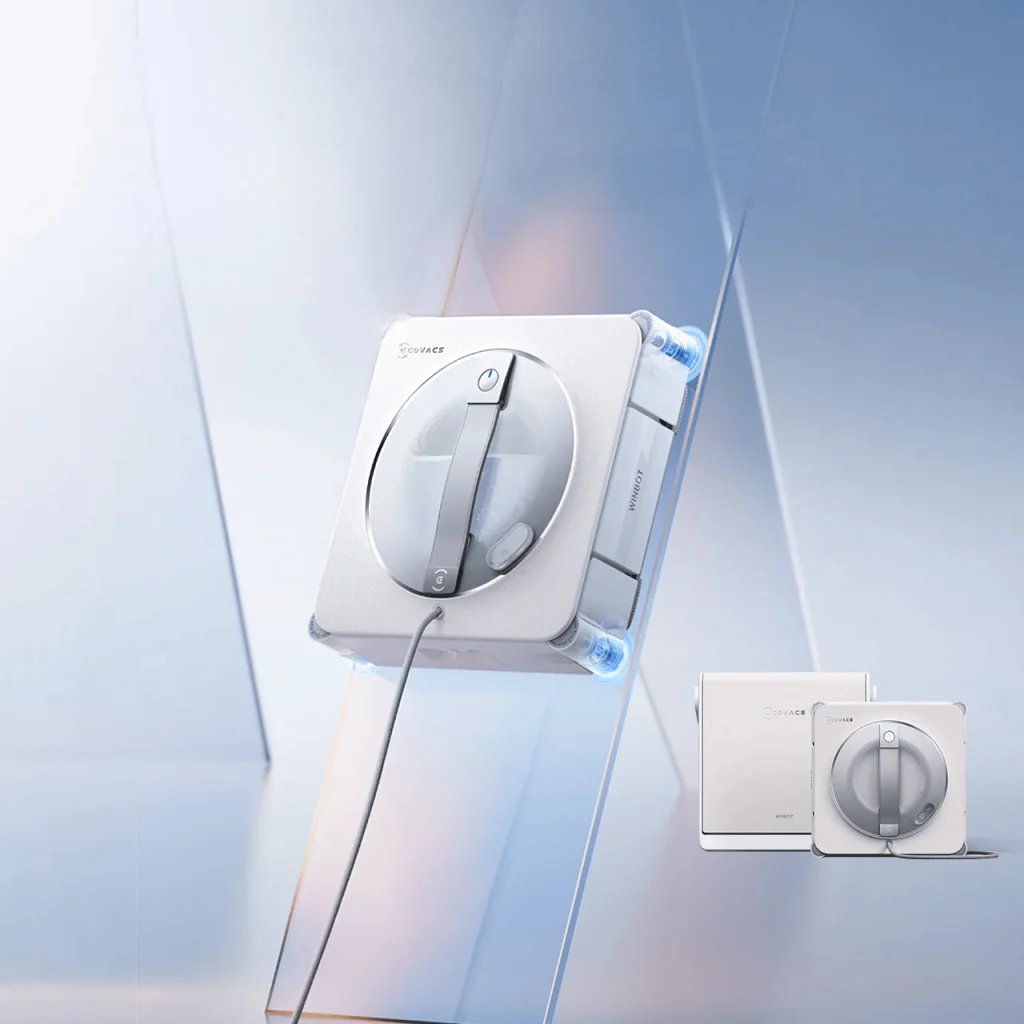
Window cleaning robot reviews in 2026 broadly agree that these machines work on flat, reachable glass, cutting hand-cleaning time by roughly half. They also agree they struggle on steep skylights, heavy dirt and glass above 4 metres, where reach and suction run out.
“Do robot window cleaners work” is one of the most searched questions in this niche, and the honest answer depends entirely on which window you mean. Let us separate the two cases that reviews tend to blend together.
Do window cleaning robots actually work on flat glass?
Yes, and reliably. A 2500-3000 Pa consumer unit on a clean vertical pane finishes a 1.5 m² window in about 4 to 6 minutes. It edges around frames if the frame is flush. Battery life of 80-100 minutes covers a whole house of reachable windows. This is the case reviews describe, and their positive verdicts are earned.
The caveats are consistent too. Streaks appear if the squeegee runs dry. Dust on the glass early in a session clogs the filter. And if the glass has a deep frame lip, the robot can ride up onto it and lose traction. Minor issues, but worth knowing.
Where do window cleaning robots fail?
- Steep skylights: the suction safety margin shrinks as the angle grows past 30 degrees.
- Unreachable glass: placement and retrieval, not cleaning, become the blocker.
- Heavy organic dirt: bird droppings and pollen defeat a light-duty pump over time.
- Deep frames: obstacle handling fails and the unit stalls at mullions.
None of these are reasons to avoid the category. They are reasons to choose the right sub-type. On a glass roof, obstacle-crossing matters more than sheer suction, which is why our Lingyun Y3 review ranks it above flat-pane units for framed roofs.
How should you read a review before buying?
Four things separate a useful review from a shopping ad:
- It names the glass type and slope, not just “windows”.
- It reports cleaning time per square metre, not just “fast”.
- It says what failed, not only what worked.
- It states who should not buy the machine.
If a review cannot tell you the slope it tested on, discount it. Slope is the single variable that flips a machine from useful to useless.
Which robot is best for a high-rise or skylight job?
For a flat apartment window, a mainstream consumer unit is fine. For a high-rise facade or a large roof skylight, you want tethered glass-roof hardware with higher suction and a bigger tank. Lingdu Intelligence’s Lingkong K3 targets high-rise facade glass, and the Lingkong K3 review covers its tether setup in detail.
Skylight jobs specifically reward a machine built for slope and dirt. Rather than trust a generic star average, work through the reviews by glass type in the skylight robot review collection before you commit.
Key Takeaways
- Window cleaning robots work well on flat, reachable glass, typically 4-6 minutes per 1.5 m².
- They struggle on steep skylights, heavy dirt, unreachable glass and deep frames.
- Slope is the variable most reviews hide; demand it before buying.
- For roofs and facades, choose purpose-built tethered robots, not consumer window units.