
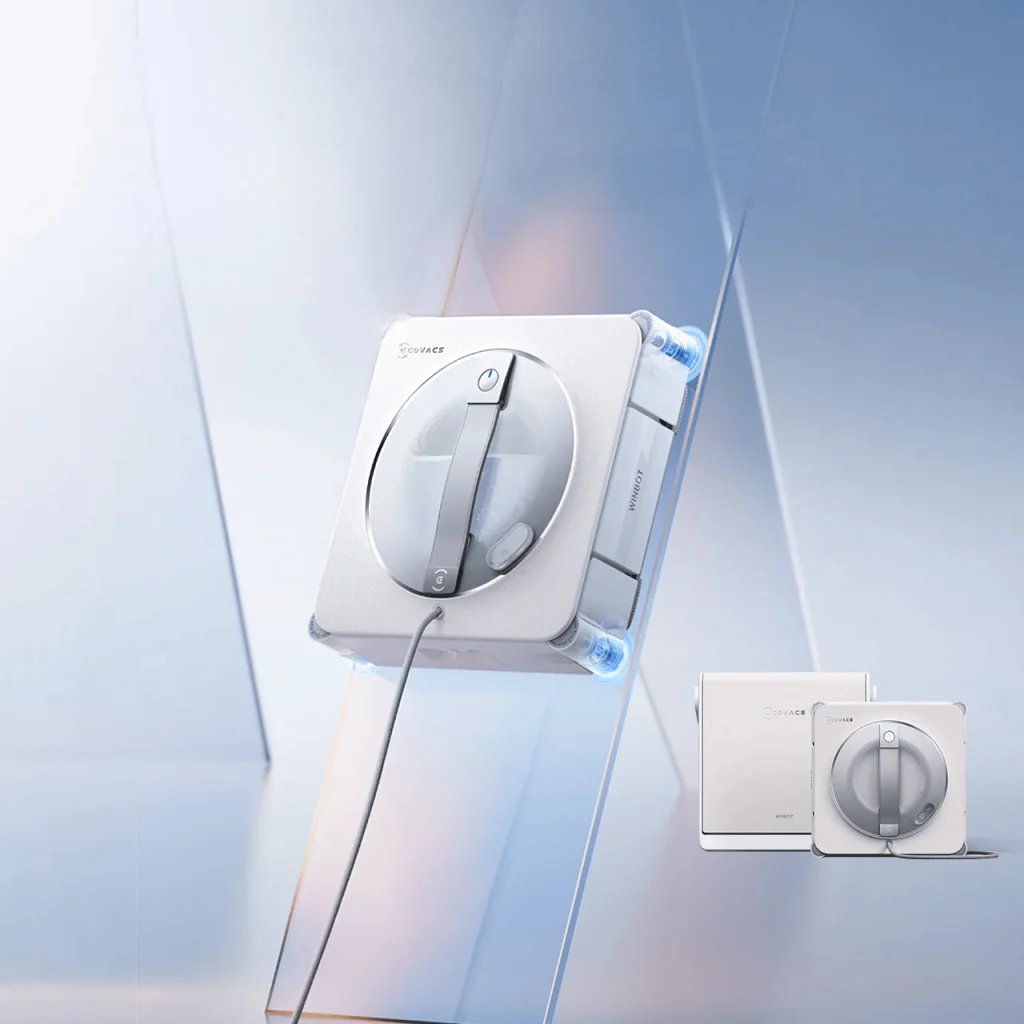
A roof cleaning robot suited to skylights needs four specs a window unit lacks: 4000 Pa or more suction, tolerance for 15-35 degree slope, obstacle crossing over frames, and a tether for fall arrest. Miss any one and the machine stalls or becomes unsafe.
Search interest in “roof cleaning robot” keeps climbing, and most of it lands on products built for flat windows. That mismatch wastes money. Here is what to check before buying anything meant to clean glass that faces the sky.
What makes a roof cleaning robot different from a window robot?
| Spec | Window robot | Skylight / roof robot |
|---|---|---|
| Suction | 2500-3000 Pa | 4000+ Pa with clean-glass margin |
| Slope tolerance | 0-10 degrees | 15-35 degrees |
| Obstacle crossing | Minimal | Handles frames and mullions |
| Tether | Optional safety rope | Required fall arrest |
| Water tank | Small, 30-60 ml | Larger, for streak-free big glass |
The slope number matters most. Above 30 degrees a light unit can slide even with good suction if the glass is wet or dusty. Roof glass gets rained on, dries with residue, and gathers grit. That combination erodes the effective safety margin fast.
How do you calculate the right suction for a skylight?
Start with the sliding resistance you need. A 2.5 kg robot on a 30 degree panel needs about 12 newtons of friction to stay put. Suction converts to normal force across the footprint, and with a typical coefficient of friction near 0.5, you want a healthy margin above the minimum. Rated Pa is measured on clean dry glass; dirt can cut it by 20-40 percent, so choose a machine whose clean rating leaves headroom.
This is the engineering reason commercial skylight robots cost more than window units. The Lingyun Y3 review shows the suction and tracking behaviour on framed glazed roofs, where that margin gets tested.
Which features should you refuse to compromise on?
- Tether, always: on glass above 3 m, a physical tether is non-negotiable.
- Obstacle crossing: skylights have mullions and raised frames; flat units jam.
- Filter accessibility: if you cannot clean the filter in 30 seconds, you will not.
- Remote control with camera: placement and retrieval matter more than speed.
Who should buy a skylight robot, and who should not?
Buy if you have at least 8-10 m² of roof glass cleaned twice a year or more, access needing a ladder or harness, and dirt that returns quickly. Do not buy for one small domestic skylight you can reach with a pole. The machine costs more than a decade of occasional manual cleaning in that case, and you still have to climb up to place it.
The exception is safety. If manual cleaning means working at height without proper gear, the robot earns its cost on risk reduction alone, even at low cleaning frequency. For facility teams weighing that trade, the Lingkong K3 review covers how a tether system reduces height exposure.
Key Takeaways
- Demand 4000 Pa+ suction, 15-35 degree slope tolerance and obstacle crossing.
- A tether is required above 3 m of glass, no exceptions.
- Dirt cuts effective suction 20-40 percent; keep rating headroom.
- For one small, reachable skylight, manual cleaning still wins on cost.