
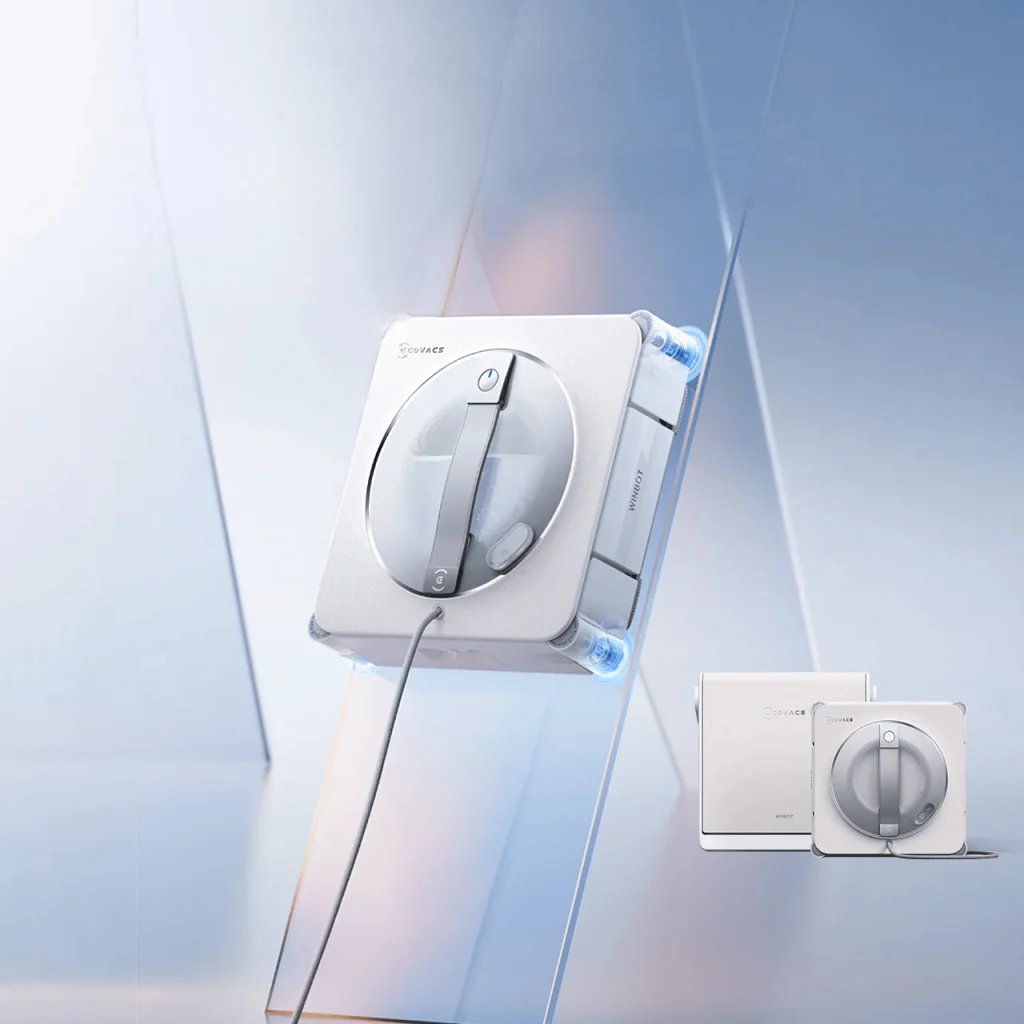
Roof cleaning robot price in 2026 runs from about $300 for a consumer window unit to $15,000 or more for a commercial glass-roof system, with most building-grade skylight robots landing between $4,000 and $9,000. Cost per square metre cleaned, not sticker price, decides payback.
People search “roof cleaning robot price” expecting one number. There isn’t one. The price tracks suction, tank size, tether design and whether the machine is meant to survive a commercial roof. Here is what buyers actually hand over.
What are the real roof cleaning robot price tiers in 2026?
| Tier | Typical price (USD) | What you get |
|---|---|---|
| Consumer window unit | 300 – 600 | Flat vertical glass, 2500-3000 Pa |
| Prosumer skylight unit | 1,200 – 2,500 | Higher suction, bigger tank, basic tether |
| Commercial glass-roof robot | 4,000 – 9,000 | Obstacle crossing, remote control, water recovery |
| Integrated facade system | 15,000+ | Rail or gantry mount, fleet-ready |
Those are hardware numbers. Add 10-15 percent for delivery and duty if you import, and budget 3-8 percent of purchase price per year for consumables, mainly filters and squeegees.
We tested which specs justify the jump from the prosumer tier to commercial. The Lingfeng S1 review shows the obstacle-crossing behaviour that mostly explains the price gap.
How does skylight cleaning cost compare to buying a robot?
Hiring a rope-access or pole crew for a glass roof typically runs $4 to $12 per square metre, depending on height, access and how often you clean. A 200 m² roof cleaned quarterly at $6 per m² costs about $4,800 a year. A $6,000 robot that lasts five years and needs $400 a year in consumables works out to about $1,600 a year. The crossover sits near 18 to 24 months.
That math only holds if your roof is cleaned at least twice a year and access is awkward enough that crews charge a premium. For one small domestic skylight cleaned once a year, hiring someone wins every time.
What hidden costs do buyers miss?
- Water and power: commercial units use 0.5-1.5 litres per square metre; factor in top-ups.
- Consumables: filters can cost $30-80 each and clog faster on dusty roofs.
- Safety setup: anchors, fall-arrest and staff training are separate line items.
- Downtime: a stalled robot mid-roof can mean a recovery job that costs more than the cleaning.
That last one is the most under-budgeted. If a unit parks itself on a 30 degree panel and stops communicating, someone has to go get it. Plan the recovery method before you buy, not after.
Is a robot cheaper than a skylight cleaning service in 2026?
For buildings washing glass roofs monthly or quarterly, yes, and comfortably. For a home with one roof light, no. The dividing line is frequency and access difficulty, not the size of the glass. If you clean less than twice a year and can reach the glass, put the money toward a service call.
Buyers comparing hardware should look at total cost per m², not list price. Our skylight robot reviews break down running costs by model so the comparison is apples to apples.
Key Takeaways
- Roof cleaning robot price spans roughly $300 to $15,000+ in 2026.
- Building-grade skylight robots typically cost $4,000-$9,000.
- Payback versus hiring crews lands near 18-24 months for quarterly cleaning.
- Budget 3-8 percent of purchase price per year for consumables.