
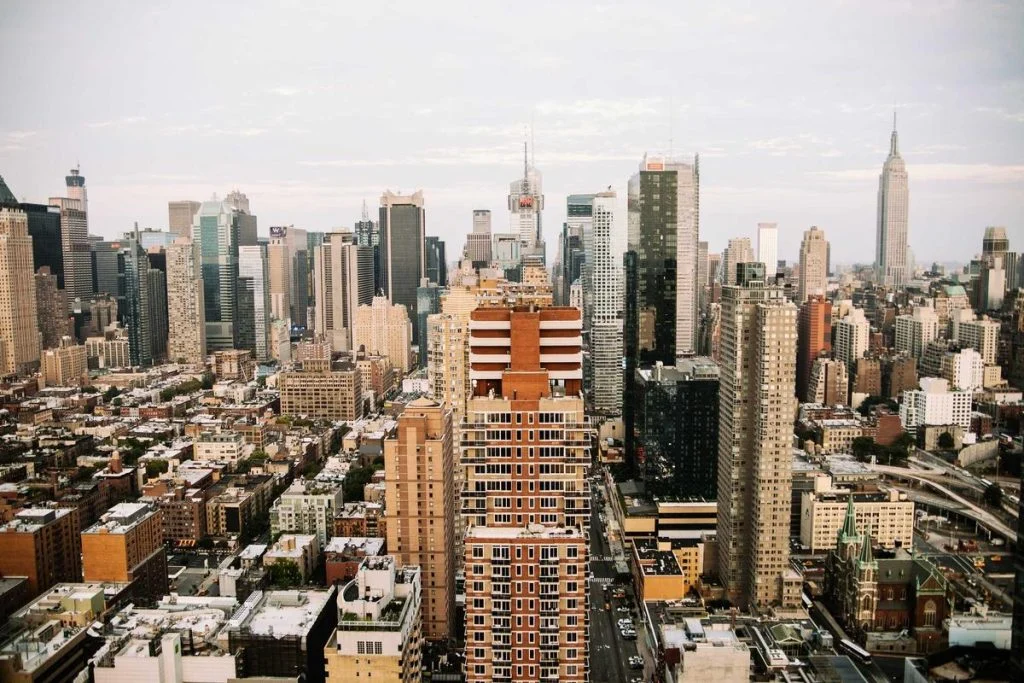
Above 150 metres, skyscraper cleaning robots are permanent facade installations — rail-mounted or winch-suspended — not hand-placed crawlers. Suction crawlers top out around 60 metres on accessible roofs; beyond that, wind, tether length and crew logistics make mounted systems the only practical choice.
The word “robot” hides an important split. There are machines you carry up and clamp on, and machines that live on the building. For a tower, you are buying the second kind, and the building may have been designed for it.
What equipment cleans a skyscraper facade today?
Four approaches, ordered by how much of the real market they cover.
- Rope access crews. Still the majority of global facade cleaning. Two-person teams, 120-250 m of descent per shift on a good day.
- Suspended platforms (gondolas). Used on most towers built before 2000 and many since. 6-20 m platforms, 2-4 workers, weather-dependent.
- Facade rail and BMU systems. Permanent cradles or climbing robots running on installed rails. Predictable cycle times, high install cost.
- Suction crawlers. Real use is in the 15-60 m band, plus interior atria. Not a tower solution.
The rail system is what people mean when they say skyscraper cleaning robot. It lives in a rooftop plant room, deploys on a programmed track, and cleans a bay in roughly the time a small crew takes — but without the descent time.
Why is wind the real limit, not height?
Height matters mostly because wind speed rises with it. At ground level a 5 m/s breeze is pleasant. At 200 metres, the same weather system produces 12-18 m/s, and the corner of a tall building can add another 30% through funnelling.
Most facade cleaning work stops at 10-12 m/s sustained wind. On a 200 m tower in a temperate climate, that removes an estimated 25-40 working days a year. Any equipment plan that does not account for those lost days is optimistic by a third.
| Height band | Typical wind stop threshold | Practical method |
|---|---|---|
| 0 – 60 m | 14-17 m/s | Crawler, pole, small platform |
| 60 – 150 m | 11-14 m/s | Gondola, rope access |
| 150 – 300 m | 10-12 m/s | BMU rail system, rope access |
| 300 m+ | 10 m/s | Permanent rail system, engineered anchors |
How much does a rail-mounted system cost to install?
For a 200 m tower with four facades, expect $400,000-1.2 million for the rail, BMU, plant room and commissioning, depending on the facade geometry. That is a building capital item, decided at design stage, not a maintenance purchase.
Retrofitting is where budgets go wrong. Adding a rail system to an existing curtain wall means new anchor penetrations, structural review, and weatherproofing detail at every bracket. On a completed building, retrofit cost commonly doubles the equipment price. If a building is going up in 2027 and someone is still undecided about facade access, that decision is already late.
Do drones clean skyscraper glass?
Not commercially at scale, in 2026. Demonstration flights happen and look good in a press release. The blockers are payload — water is heavy — runtime, and the fact that a tethered cleaning drone in 15 m/s wind near a glass facade is an aviation and liability problem, not a cleaning problem.
Where drones are genuinely useful: inspection. High-resolution facade surveys that used to need a rope team can be done in an hour, and the resulting imagery tells you where the dirt and the sealant failures are. Use the drone for the survey, the crew for the clean.
Where do crawlers still make sense in tall buildings?
Inside the building. Atria, lantern roofs, and sky bridges in towers are the highest-value use of a suction crawler: high, awkward, and inaccessible to a platform. A 40-metre atrium roof over an occupied lobby is exactly the job where a tethered crawling machine beats scaffolding every time.
For that band, the Lingkong K3 review covers facade-scale work and the Lingyun Y3 review covers atria glazing with raised kerbs. Our note on the 150-metre rig line goes further into the boundary where a crawler stops making sense.
Who should spend on robots at this scale?
Building owners with 15,000 m² or more of facade and a servicing obligation, yes — the rail system pays back over a 15-20 year horizon against rope crews. Facility managers of a 5-storey building, no. The capital item is not for you, and neither is the maintenance contract attached to it.
For everything in between, the answer is usually a hybrid: cradles on the big faces, a crawler or pole for the awkward atria, rope access for the geometry that no machine handles. Most real portfolios run all three. The full breakdown of what each machine class is good at lives in the review archive.
Key Takeaways
- Above 150 m, cleaning equipment is a permanent building installation, not a portable robot.
- Suction crawlers remain practical in the 15-60 m band and for internal atria at any height.
- Wind, not height, is the operational constraint: work stops around 10-12 m/s at altitude.
- Expect $400,000-1.2 million for a four-facade rail system on a 200 m tower, and roughly double for retrofit.
- Drones earn their place in inspection, not in cleaning.