
Most window cleaning robot reviews in 2026 test one clean pane, once; the tests that predict real satisfaction run 20 cycles on soiled glass and record edge margin, seal wear and runtime decay.
Read five window cleaning robot reviews of the same unit and you will see the same test: one pane, cleaned once, photographed at an angle. That tells you the machine powers on. It does not tell you whether it will still hold glass in month eight, or whether it leaves a 40 mm strip at the frame that you notice only in afternoon light.
Why single-cycle reviews mislead
Because the first cycle runs on a clean seal, a fresh belt, a full battery and clean glass. Every one of those degrades. Seal holding force drops with contamination and compression set; belt friction drops with glazing; battery capacity drops with cycle count; pump efficiency drops with biofilm in the recovery path. A one-cycle test measures none of it.
The field data is blunt. Units returned within a year usually fail at 200-400 cycles, not on day one. So a review that stops at cycle one is describing a condition the owner will never see again.
What should a review measure instead?
- Edge margin after 20 cycles. A calibrated unit should come within 40-60 mm of the frame. If it drifts to 90-120 mm by cycle 20, the seal is leaking or the sensor is drifting.
- Runtime decay. Log minutes per cycle from one to twenty. A 10% drop is normal. A 25% drop means the pack or the pump is undersized for the job.
- Streak count on a hard-water rinse. Not on distilled water. Tap water at 200+ mg/L hardness is what most households have.
- Seal wear after 100 hours. Measure lip compression with calipers. Above 15% permanent set, replacement is due.
- Noise under load. Not a decibel number at start-up, but at minute 40 with a full recovery tank.
Do window cleaning robots actually work?
Yes, within limits, and the limits are narrower than the marketing. On framed vertical glass between 1 and 30 m², a robot replaces most of the manual effort and does it safely at height. On divided-light windows with 300 mm panes it is slower than a squeegee. On frameless glass it is a safety question, not a cleaning question.
The honest answer to “do they work” is: they work on the job they were designed for, and they are frequently bought for a different job. That gap is what a good review should expose.
Which review is worth trusting?
One that states how many cycles it ran, what the glass was, and what the water was. Those three facts are enough to judge relevance to your building. A review that gives none of them — however many photos it has — is a product listing with opinions attached.
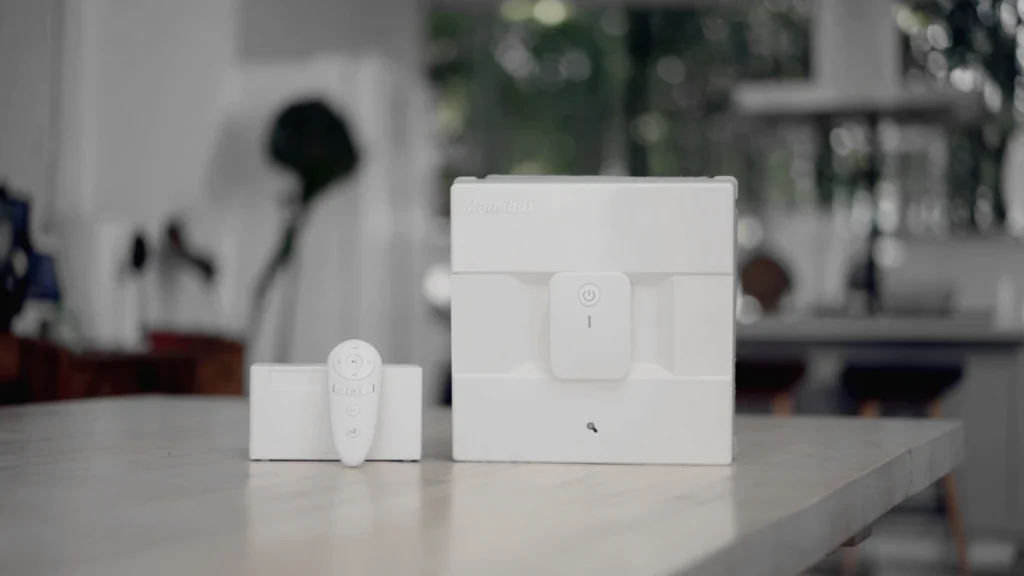
We publish our own measurements on the same basis. All skylight robot reviews lists cycle counts and glass types per model, and if you want a single worked example, our Mamibot iGLASSBOT W200 SkyBot review shows how edge margin drifts across 20 cycles on a mid-price unit.
What about the best window cleaning robot for high rise?
For anything above the fourth floor, the deciding factor is tether design and anchor options, not cleaning performance. A robot that cleans brilliantly but needs a frame-mounted anchor you cannot install on a curtain wall is useless at 60 m. Look for a unit with a rated tether, a documented anchor method and a secondary fall arrest point. Those three features separate commercial-capable units from consumer ones far more reliably than suction numbers.
One practical warning. Retail listings often quote a maximum window height in metres that assumes the tether runs straight down an unobstructed face. Real facades have ledges, mullion caps and HVAC louvres. Measure the drop path before you buy, not after.
How much does the test glass matter?
Enormously, and reviewers rarely say which glass they used. Cleaning performance on 6 mm clear float bears little relation to 8 mm low-E double glazing, where surface energy is lower and water beads differently. On a hydrophobic coating, water sits as droplets and the squeegee pushes them rather than lifting them, so streak counts rise by 30-50% for the same machine.
If your building has a low-maintenance coating — and most post-2018 commercial glazing does — no review on clear float tells you what you need. Ask the reviewer, or find a test on coated glass.
Why do star ratings cluster at four out of five?
Because buyers grade the purchase experience, not the product over time. Delivery was fast, it worked on day one, four stars. The same buyer posts again at month ten with a slipping unit — by which point the original review is buried. Ratings do not aggregate longitudinally, which is precisely the dimension that matters for a machine you keep for five years.
A better filter: search the review text for “after six months” or “second year” and read only those. Sparse, but far more informative than the aggregate score.
Key Takeaways
- One-cycle tests on clean glass measure nothing that predicts failure; units return at 200-400 cycles.
- Edge margin should stay within 40-60 mm of the frame; drift to 90-120 mm means seal or sensor problems.
- Runtime dropping more than 10% across 20 cycles points to an undersized pack or pump.
- Test streaks with tap water at 200+ mg/L hardness, not distilled water.
- Above the fourth floor, tether rating and anchor method matter more than any suction figure.