
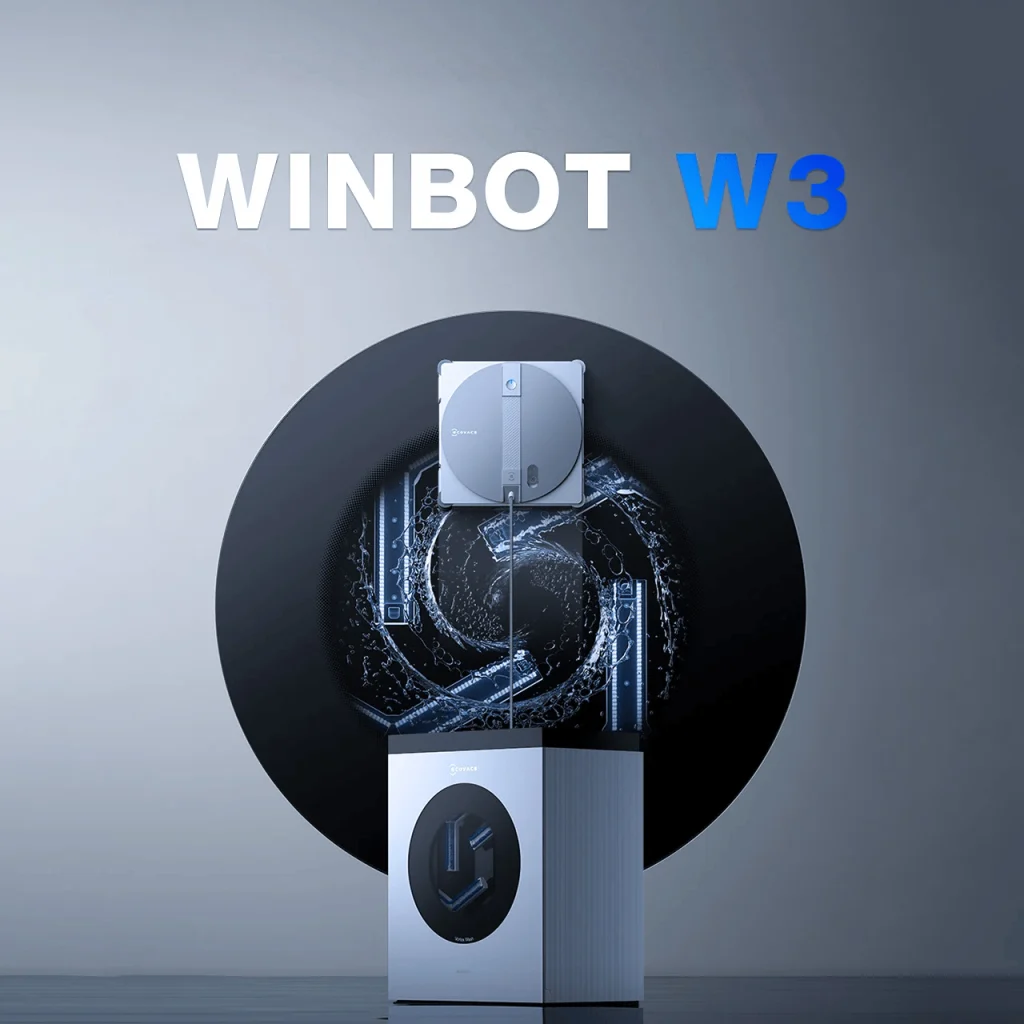
A cordless window cleaning robot in 2026 that claims 90 minutes of runtime usually delivers 40-55 minutes while climbing wet, vertical glass. The gap comes from suction load, slope angle, and temperature — three factors no marketing sheet includes. Judge any cordless unit by its runtime on a 20° incline in summer, not its best-case flat-pane number.
Cordless sounds like pure freedom until you watch a robot stall halfway down a facade because the pack hit thermal cutoff. The convenience is real. So is the math that eats it.
How long does a cordless window robot really run?
| Condition | Typical runtime | What changes |
|---|---|---|
| Flat pane, idle suction | 85-100 min | Best-case, rarely reached |
| Vertical glass, normal hold | 55-70 min | Suction draws constant power |
| 20° incline, wet glass | 40-55 min | Higher grip, more heat |
| Hot roof, 35°C+ | 30-45 min | Thermal throttling |
| Aged pack (18 months) | 25-35 min | Cell degradation |
So a “90-minute” unit is a “45-minute” unit on the work it was bought to do. That is not a defect, it is physics, but the spec sheet does not say so.
What drains the battery fastest?
Suction, by a wide margin. A robot rated 3000 Pa is running its vacuum motor hard the entire cycle to stay on glass. Slope multiplies the load, because the seal has to fight gravity as well as hold contact. Temperature adds the final squeeze: lithium cells lose capacity and throttle output when hot, and a sunlit roof in July is a hostile environment for any battery.
Water handling matters too. Pumping and heating water costs power. A cordless unit that also carries a large tank is trading runtime for refill convenience, and that tradeoff is rarely explained at point of sale.
Does cordless actually beat corded for real work?
For spot work and low-height windows, yes. No cable to manage, faster setup, fewer snag hazards. For a large facade or a tall skylight run, corded usually wins on sustained output and costs less per hour, because you never stop to swap or recharge packs.
On a commercial high-rise, the honest answer is that most heavy machines are still tethered for power and safety. Our Lingkong K3 review covers a tethered high-rise setup and shows why the tether is about safety first, power second. A cordless unit on a 30-meter facade is a liability, not a feature.
How do you read a runtime claim honestly?
- Divide the advertised figure by two. That gets you close to vertical, wet-glass reality.
- Ask for the slope. No slope in the test means the number is meaningless for roofs.
- Ask about temperature. A 25°C lab test says nothing about a sunlit roof.
- Check pack age. Runtime drops 25-40% by month eighteen.
- Count charging time. A 45-minute runtime with a 3-hour charge is a real constraint on big jobs.
If runtime is your deciding factor, compare units that publish loaded figures. The collected window and skylight robot reviews list real-world runtimes alongside charge times, which is the pairing buyers need and spec sheets omit.
Who should pick cordless, and who should not?
Choose cordless if you clean windows under about 8 meters, run short cycles, and value setup speed. Keep a spare pack so a swap costs seconds rather than hours. Do not choose cordless for a glass atrium roof, a large curtain wall, or any job where a mid-cycle stop strands the robot in an awkward spot. There, tether and power line matter more than freedom.
One more thing people miss: a spare battery that stays charged and rotated extends usable life far more than any “fast charge” claim. Buy two packs, cycle them, and store both at half charge when idle.
Key Takeaways
- Halve advertised cordless runtime to estimate real performance on wet, vertical glass.
- Suction load, slope and heat are the three biggest battery drainers, in that order.
- Thermal throttling on a hot roof can cut runtime to 30-45 minutes.
- Battery capacity falls 25-40% by month eighteen, so plan pack replacement into cost.
- Cordless suits short, low jobs; large facades and tall skylights still favor tethered power.
How do you extend cordless runtime in practice?
- Clean cooler. Early morning work avoids thermal throttling and gains 20-30% runtime.
- Pre-rinse. Less dirt means fewer passes and less motor load.
- Dry-pane passes where safe. Suction load stays similar but water pumping stops.
- Rotate packs. Two packs cycled last longer than one recharged constantly.
- Store at half charge. Full-charge storage degrades cells faster than most owners realise.
None of these require buying anything. They require treating the pack as a consumable with a lifespan, rather than a permanent fixture.
How long do cordless batteries actually last?
Expect two to four years of useful service in regular use, less if the unit runs hot or sits fully charged for months. After two years, capacity loss of 25-40% is normal, and the honest fix is a new pack rather than longer cycles that strain an ageing cell.
Frequently asked questions about cordless robots
Can a cordless unit clean a whole facade? Not practically. Runtime and tank size cap it at modest areas; tethering exists for a reason.
Is fast charging worth the premium? Only if you have one pack. Two standard packs cycled sensibly beat one fast-charged pack nearly every time.
Does cordless make sense on a roof at all?
For a small, low, easily reached skylight, a cordless unit is genuinely convenient and the runtime limit rarely bites, because the job finishes in one charge. For a large roof or anything above a few metres, the maths turns against it. You cannot swap a pack mid-facade without bringing the robot down, and every swap costs time the tether never costs you.
The way to decide is blunt. Count how many square metres one charge realistically covers on your glass, then compare that with the size of the surface you need to finish in one uninterrupted run. If the charge covers it, buy cordless. If it does not, the freedom is a trap.