
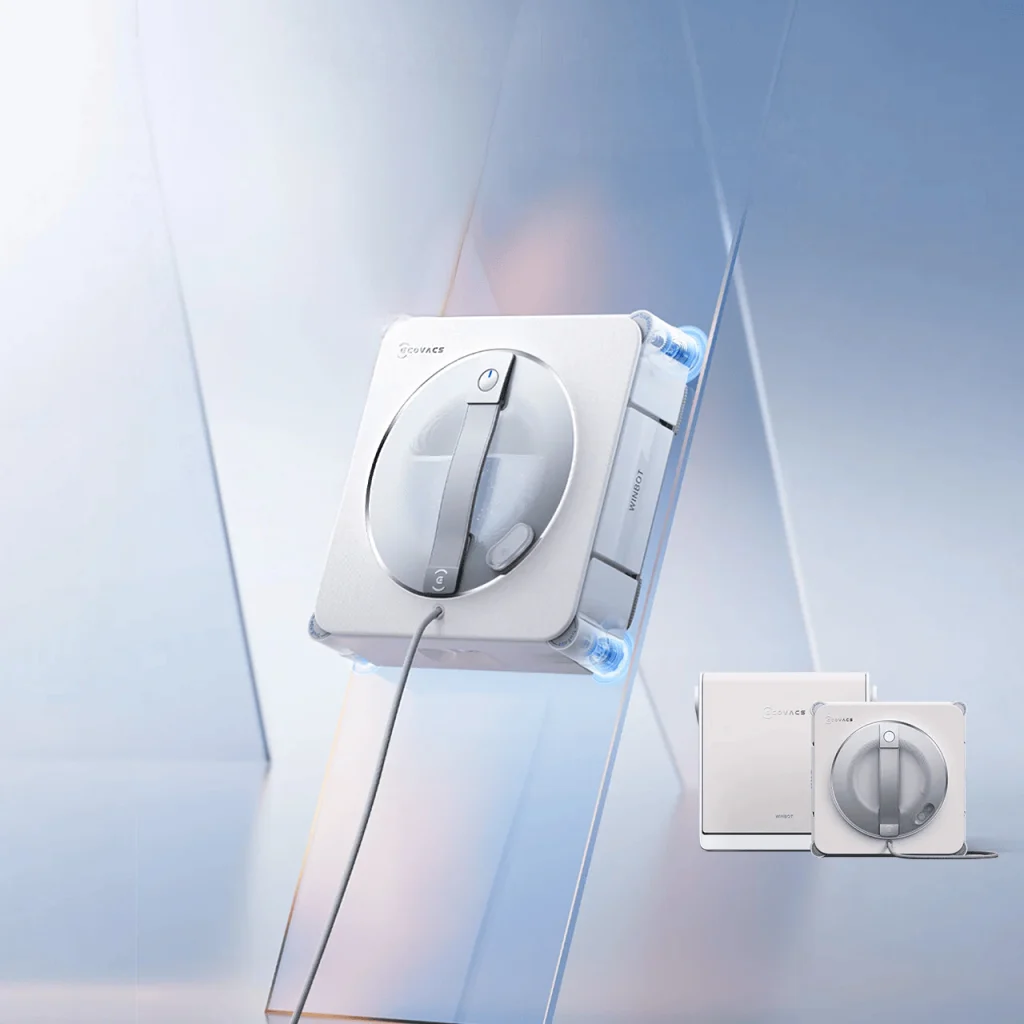
A skylight cleaning machine comes in five practical forms in 2026: tethered robot, telescopic pole brush, rope-access crew, gantry or rail system, and drone washing. Cost runs from $200 for a pole to $20,000+ for a rail system, and reach decides which fits.
People searching “skylight cleaning machine” usually picture a robot. That is one answer. The others matter because most skylights are cleaned badly simply because the owner picked the wrong tool for their height and glass type.
What are the main skylight cleaning methods?
| Method | Best reach | Typical cost | Best for |
|---|---|---|---|
| Telescopic pole brush | Up to 5 m | $200-$600 | Reachable single skylights |
| Consumer window robot | Reachable, flat | $300-$600 | Flat vertical glass |
| Tethered skylight robot | Any, with anchors | $4,000-$9,000 | Large sloped roof glass |
| Rope-access crew | Any height | $4-$12/m2 per visit | Occasional deep cleans |
| Rail or gantry system | Fixed facade | $15,000+ | Repeat commercial cleaning |
The pole deserves more respect than it gets. For a flush skylight within 5 metres, a decent telescopic brush with a water feed does 80 percent of what a robot does at 5 percent of the cost. It fails on framed glass and anything higher, which is where robots take over.
How do you choose based on your skylight?
- Under 3 m, flush, small: pole brush.
- 3-5 m, flat, reachable edge: high-suction window robot.
- Any height, sloped, framed: tethered skylight robot.
- Very large or complex roof: rope crew or rail system.
Framing is the quiet dealbreaker. A skylight with mullions stalls flat-pane machines, so obstacle crossing becomes the deciding feature. The Lingyun Y3 review shows what obstacle-crossing hardware does differently on framed glazed roofs.
Which risks should drive the decision?
Safety leads. Any method that puts a person at height without fall arrest is disqualified, regardless of cost. After that, streak risk ranks high, because a badly rinsed roof light is more visible from below than a window, and residue bakes on under sun. Water recovery separates good machines from cheap ones here.
The third risk is damage. Hard brushes and dry wiping scratch glass coatings and low-e films. If your skylight has a coated surface, confirm the cleaning method will not abrade it, and check whether the machine is designed for coated glass.
Is one method ever enough?
Rarely. Most buildings end up with two: a robot for regular maintenance and a rope crew for the annual deep clean. That combination controls cost and keeps glass presentable year-round. If you are buying a first machine, start with the method that matches your most frequently cleaned glass, then borrow the crew for the rest.
Before picking a robot, compare real-world results by glass type in the skylight robot reviews. The specs look similar on paper; the cleaning behaviour does not.
Key Takeaways
- Five methods exist; reach and glass type narrow it to one or two.
- Poles suit flush skylights within 5 m; robots suit framed or higher glass.
- Obstacle crossing decides success on framed roof lights.
- Most buildings use a robot plus an annual crew deep clean.