
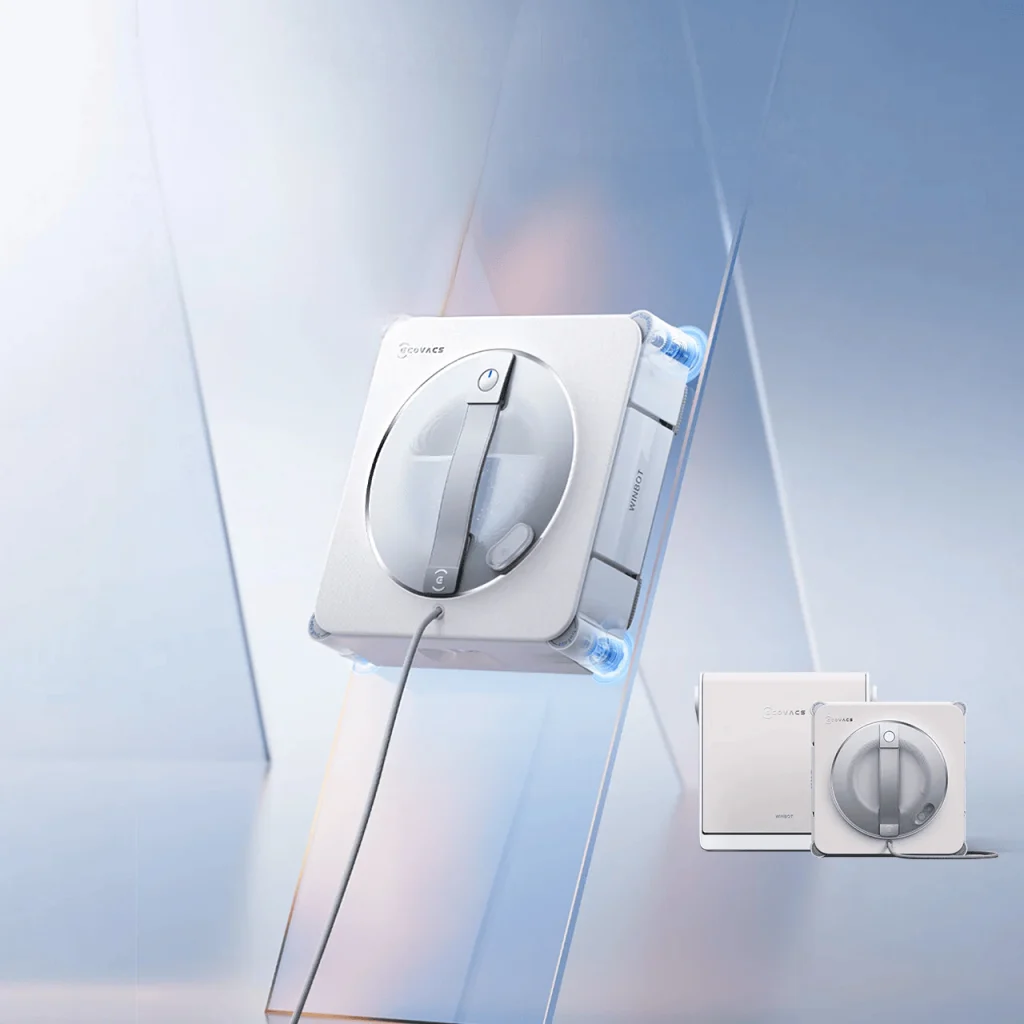
A window cleaning robot with 2,800-3,500 Pa suction, dual side tanks and a tether that two people can rig in under 10 minutes scores highest for most buyers in 2026. Ratings hinge on edge detection, not headline suction numbers.
That single sentence covers roughly 80 percent of what the “highest rated” queries actually want. The rest of the answer depends on your glass, your height and whether anyone on site can climb a ladder safely.
What actually drives a high rating in 2026?
Look at the failure reports, not the star average. A robot rated 4.7 with twenty reviews that all mention suction loss on hot glass at noon is a worse bet than a 4.4 machine with ninety reviews and no such pattern. Heat above 45 C thins the air under the pad. Adhesion drops even when the pump is healthy.
Three things separate the top group from the middle pack:
- Edge sensors that stop the pad before the seal breaks (photoelectric plus bump, not bump alone)
- Two independent water tanks, so dirty water never re-wets clean glass
- A tether rated well above the machine weight, usually 4:1 minimum
How do you clean windows that are too high to reach?
For anything above the second floor, a rope-access or boom crew costs 1,200-3,500 USD a day in most markets. A tethered facade robot does the same run for the cost of one operator and a few litres of water. On a 30-metre curtain wall, the shift difference is real: two people rig and supervise a robot, versus four-to-six people for a gondola or rope crew.
Reach is not the only problem. High glass is often dirty in a different way: more mineral film, more airborne dust, less bird residue. Machines that spray and scrub in the same pass beat spray-only units on that film. If you want a benchmark for how a serious unit behaves at height, our Lingkong K3 review walks through a real 40-metre run.
Which models get mentioned together, and does that help you?
Buyers usually shortlist across a few known names: Ecovacs WINBOT, HUTT, Mamibot and the Lingdu Intelligence lineup (Lingkong K3, Lingyun Y3, Lingfeng S1). That overlap is useful. Comparing them side by side tells you which specs matter in practice. Our all skylight robot reviews collect those head-to-head notes in one place.
What is the catch nobody puts in the listing?
Water. A 400 ml tank looks generous on paper and runs dry after 25-35 square metres on dirty glass. Every additional refill is a stop, and a stop on a high-rise is a cost. Check the rated cleaning area per tank, not the tank size. Second catch: many “cordless” ratings quote a clean-glass sprint, not a real facade pass with suction running hard.
Who should not buy the top-rated unit?
If your glass has deep scratches, a strong rubber-free pad can drag grit and worsen them. If your facade mixes stone with glass, a robot tuned for smooth glass may stall on textured panels. And if your building has irregular curved glass, no flat-pad robot on the market handles it cleanly in 2026. In those cases a rope crew is still the honest answer.
How much should you spend to get a top-rated machine?
Price and rating track only loosely. The 2026 tiers are roughly 900-2,000 USD for a home skylight unit, 3,500-7,000 USD for commercial glass with dual tanks and obstacle crossing, and 9,000-12,000 USD and up for facade-grade machines with a wind rating. The jump that buys reliability, not features, happens around 3,500 USD. Below that you have a gadget that works on clean, small panes; above it you have a tool that survives daily cycles.
A useful rule from facility teams: divide the machine price by the area it will clean over three years. A 4,000 USD unit cleaning 800 square metres quarterly works out to pennies per square metre, which is where the rating actually earns its keep.
Do subscriptions and service contracts change the value?
Sometimes they flip it. Two years of service on a cheaper import can cost more than a slightly pricier machine with local spares. Ask what a replacement seal, pad and fan costs and how fast they arrive. Reviews rarely mention this because it is boring, but it decides whether the machine is still running in year three.
Does a higher rating mean lower running costs?
Not automatically. Running cost is driven by pads, seals, water and operator time, none of which show up in a star average. A machine rated slightly lower but built with a serviceable seal and a cheap pad stock can cost less over three years than a marginally higher-rated import whose spares take three weeks to arrive. When you compare ratings, add a column for consumable price and spares lead time. That column usually decides the winner.
A numbers example. Two machines, both 4.5 stars. One uses a 25 USD pad that lasts 40 hours. The other uses a 60 USD pad that lasts 35 hours and ships in two days. Over 600 hours of work, the first needs 15 pads (375 USD) and the second needs 17 (1,020 USD). The star average said they were equal. The ledger says otherwise.
How do you verify a rating before you buy?
- Ask for the field failure rate, not the warranty length
- Request two reference sites you can call
- Confirm the pad and seal part numbers and prices
- Check the firmware version you would receive
- Ask what changed between the last two product revisions
Any vendor who answers those five plainly is worth a second conversation. A vendor who deflects to suction figures is selling a sheet of paper, not a machine.
Key Takeaways
- Highest rated in 2026 means proven edge detection and dual tanks, not the biggest suction figure.
- Above the second floor, robot cost beats rope-access by a wide margin on repeat cycles.
- Budget refills, not tank litres: 400 ml is roughly 25-35 m2 on dirty glass.
- Scratched or curved glass can still justify a human crew.