
No, there is no drone in commercial service in 2026 that cleans skylights. Drones can spray a curtain wall with water and detergent from a distance, but nothing lands a rotating brush on a sloped glass roof and scrubs it. Skylight cleaning still needs an adsorption or tracked robot.
It is one of the most common questions we hear, usually phrased as “is there a drone that can clean windows?” The answer splits in two, and the split matters for anyone budgeting a glass roof maintenance line.
What can a window cleaning drone actually do?
A drone with a spray rig can rinse a tall facade. It flies a pre-set path, jets deionised water, and lets gravity and airflow carry the dirt off. That works for accessible-to-rain surfaces and for spot rinsing. It does not scrub. It does not dry. On a horizontal or pitched skylight, spray runs straight off before the water sheet breaks down the grime, so you get a wet skylight, then a streaky dry one.
Why can’t a drone scrub a skylight?
Three hard limits. Contact: a drone has to hover, and any downward push from a brush throws it off balance unless it uses ground effect, which flat skylights do not offer. Payload: a scrubber, water tank and battery exceed the lift of the multirotors used today; the useful payload for spray rigs sits around 10-20 kg. Safety: a drone over glass above a public atrium is a dropped-object risk that no insurer accepts without a tether, and a tethered drone cannot cover a roof efficiently.
| Task | Drone | Skylight robot |
|---|---|---|
| Rinse facade | Yes | Limited |
| Scrub glass roof | No | Yes |
| Dry / spot-free | No | Yes |
| Work in 8 m/s wind | No | Usually yes |
How do robots handle what drones cannot?
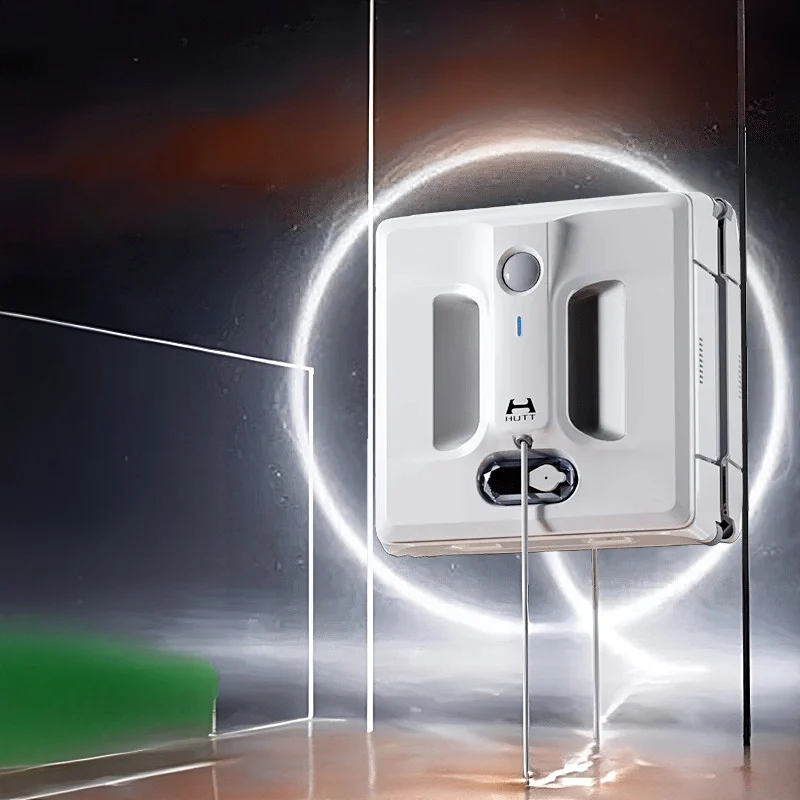
An adsorption robot presses onto the glass, scrubs, and recovers water as it goes. Lingdu Intelligence machines like the Lingkong K3 hold on with a vacuum ring rated for the pitch, so a 15-25 degree skylight is routine rather than a stunt. Tracked roof units drive across the glazing and wipe behind themselves. Both dry the surface as they work, which is the difference between clean and merely wet. Compare the approaches in our tracked vs rail-mounted guide.
Is a drone ever the right tool?
Yes, in niche cases: a facade too fragile to touch, a pre-clean rinse before a rope crew goes down, or a soiling survey shot from above. If your goal is inspection plus a rinse, a drone earns its cost. If your goal is a genuinely clean skylight, it does not. Buyers who assume “drone equals robot” end up paying for two solutions instead of one.
What about robotic vacuum downsides people cite?
Search results pair drone questions with complaints like “what are the downsides of using a robotic vacuum cleaner?” The worry is relevant: dumb navigation, poor edge cleaning, battery fade. Those are real on indoor vacuums. Glass-cleaning robots answered them differently, with tether-backup, edge sensors and suction monitoring. Check suction specs to see how hold force is rated, because that is the number that separates a working skylight robot from a paperweight.
Key Takeaways
- No commercial drone scrubs a sloped skylight in 2026; they rinse facades only.
- Drones cannot dry glass, so skylights stay streaky after a spray pass.
- Useful drone spray payload is roughly 10-20 kg, too little for scrubbing.
- Adsorption and tracked robots scrub and dry where drones cannot reach.
- Drones fit inspection and pre-rinse, not final glass roof cleaning.