
No drone cleans windows the way a robot or a person does. Drones can spray a cleaning solution onto glass, but they cannot apply the contact pressure or squeegee action that removes dirt. For skylights and glass roofs in 2026, suction robots and rope crews do the actual cleaning.
This is one of those questions with a tidy answer and a messy reality. A drone that sprays is not a drone that cleans.
Why can’t a drone scrub glass?
Three hard limits. Thrust budget, contact force, and stability. A multirotor spends nearly all its power staying up. Pressing a brush or squeegee against glass needs sustained sideways force, and that force pushes the drone off station. Add wind at height and the approach falls apart.
Cleaning also needs dwell time. A squeegee has to travel a controlled line at even pressure. Drones hover, they do not track.
What can drones actually do for windows?
- Spray a cleaning solution or rinse water onto high glass
- Inspect glass and seals with a camera
- Deliver water to a rope crew to cut trips up a building
Inspection is the sweet spot. A drone with a camera finds cracked panes and failed seals fast. That is real value, just not cleaning.
So what does clean a skylight in 2026?
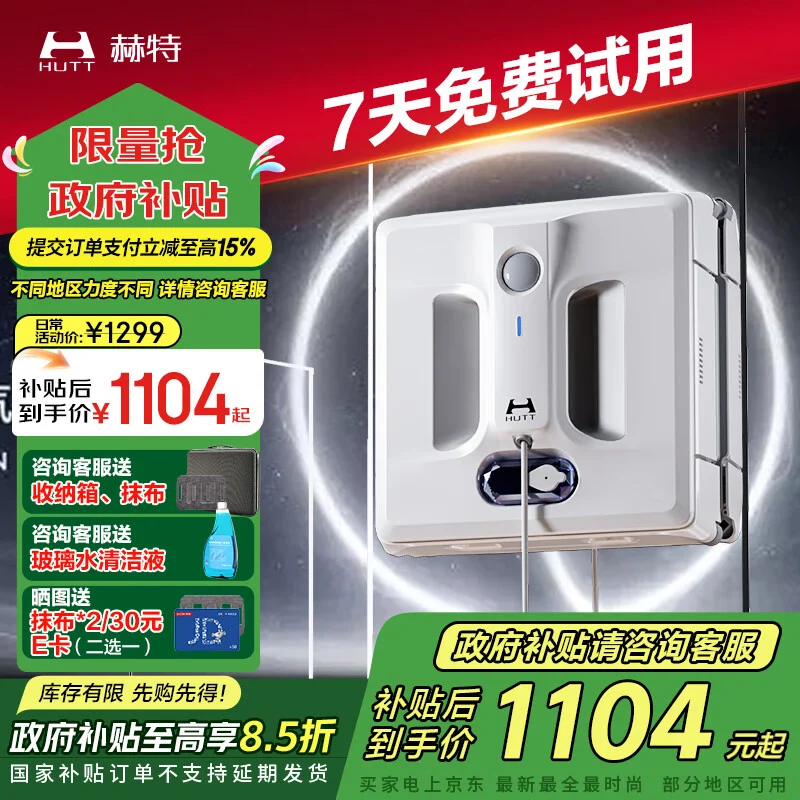
Two tools. Suction robots for regular maintenance, and rope-access or water-fed pole crews for heavy build-up and awkward shapes. A glass-roof robot runs a seal against the pane, holds on with vacuum, and squeegees water into a recovery tank, which is the contact cleaning a drone cannot do. The height and slope selection guide covers how to pick one.
When would a drone make sense on a cleaning job?
When the glass is lightly soiled glass above a void where no robot can reach and no crew can rig cheaply. Even then, a drone only lays down water; the dirt stays unless something touches it. That is why drone cleaning stays a rinse aid, not a replacement.
Who should not spend on a cleaning drone?
Anyone expecting a spotless facade from the air. Also anyone with strict no-fly zones near airports or dense sites, where permits kill the idea before the cleaning does. If your goal is clean skylights rather than airborne spraying, put the budget into a robot and a service plan.
What about drones that physically touch the glass?
A few experimental rigs press a small pad against a pane, but they are slow, wind-sensitive and nowhere near commercial service. For scheduled building maintenance in 2026, none of them are a practical replacement for a robot or a crew. Treat test videos as interesting, not as a product.
Could a drone at least do the rinse stage?
It can lay down water, but rinse without agitation just moves dust around. The value of a drone on a facade is inspection: cracked panes, failed seals, blocked drains. Pair that camera work with a cleaning robot and you cover both jobs properly.
What skills does a skylight robot need instead?
- Rated suction that holds on a slope
- Optical edge sensing for frames and voids
- Water recovery to avoid drips below
- A tether point and a defined exclusion zone
None of that is drone behaviour. It is contact cleaning, and it stays on the ground and on the glass. Details are in the height and slope guide.
What is the realistic role of drones on a facade?
Drones are becoming a standard inspection tool, and that is a genuine gain. A camera pass finds cracked panes, failed gaskets and blocked drains without putting a person on a rope for a first look. That saves a rig and a day on many buildings.
But inspection is not cleaning. The gap between spray and scrub is the whole job. Dirt bonds to glass with oils and minerals, and it takes contact and dwell time to lift. A drone can deliver water to the top of a panel; it cannot work the surface. Anyone who has watched a rinse dry on dusty glass knows the result: a clean patch that fades back within days.
Use drones where they earn their keep. Inspect quarterly, log the defects, then send a robot or a crew to do the cleaning those defects demand. That pairing gets you a well-maintained facade and a realistic budget. Chasing a cleaning drone in 2026 is chasing a product that does not yet exist at commercial scale.
What are the compliance limits on drone use?
Many urban sites sit in no-fly zones or need permits, and those rules kill drone cleaning before the physics do. Even spray drones need a licensed operator, insurance and permissions that rarely pencil out for a routine cleaning contract. Check the local rules before you cost the idea.
Inspection drones face fewer barriers, but still need a spotter and a permit in controlled airspace. That is fine for a quarterly survey and hopeless for weekly cleaning. Keep the use cases separate and the compliance work stays manageable.
The practical takeaway: fly for inspection, clean on the glass. Anyone selling a drone for window cleaning in 2026 should be able to show a licensed site and a scrubbed result. Until that exists at scale, the robot and the rope crew remain the tools that get skylights actually clean.
Key Takeaways
- Drones can spray glass but cannot scrub or squeegee it.
- Contact force and dwell time are the physics limits, not battery.
- Drone inspection of high glass is genuinely useful.
- Suction robots and rope crews do the real cleaning in 2026.
- No-fly zones and permits rule drones out on many urban sites.
Trying to clean a glass roof that drones cannot reach? Talk to us.