
Real window cleaning robot reviews in 2026 come down to three measurable things: edge reach in mm, suction hold on wet glass, and streaks per square meter after a full pass. Anything else — star ratings, influencer clips, unboxing photos — tells you almost nothing about whether the robot survives your skylight or facade.
I have read a few hundred of these reviews while tracking the skylight and curtain wall robot market. The pattern is boring and predictable. A reviewer unboxes a unit, films it on a spotless interior window, calls it amazing, and moves on. Nobody tests the failure case that actually matters: a sloped glass roof with morning condensation and a 12 mm frame lip.
What should a window cleaning robot review actually measure?
Four numbers, and nothing complicated.
- Edge distance. The gap left at the frame. Good units get to 30-50 mm; cheap units leave 80-120 mm of untouched glass. This is where streak complaints come from.
- Suction hold on wet glass. Rated in Pa, but the honest figure is how it behaves after 10 minutes on a wet pane at a 20° slope. A robot rated 3000 Pa can still slide if the seal wears.
- Coverage per pass. Real testers count streaks after one full cycle, not two. One pass is what a facility actually pays for.
- Run time under load. Cordless units advertised at 90 minutes often drop to 40-55 minutes while climbing vertical glass.
If a review does not mention at least two of those, it is a product page with a byline. Move on.
Do window cleaning robots actually work on skylights and sloped glass?
On flat or gently sloped glass, yes, and the numbers are not close. A manual rope-access crew cleans roughly 60-100 m² per hour on a good day with two people. A tracked skylight robot, run by one operator, covers 150-250 m² per hour on a clean roof and keeps that pace all day because it does not tire or need a second climber.
The honest caveat: steep glass and heavy debris change the math. Above about 25-30° the robot has to grip harder, battery drains faster, and loose grit becomes a real risk to the drive belts. If you have a 35° glass atrium roof covered in pollen and bird droppings, a robot helps but does not replace a pre-rinse. Reviews that skip this detail are selling you a fantasy.
For a detailed walkthrough of one unit’s real-world numbers, our Lingkong K3 review breaks down suction, edge reach and cycle time on a commercial high-rise facade. It is also one of the few tests that reports what happens when the water tank runs low mid-cycle — a failure mode most reviews ignore entirely.
Which window cleaning robots get reviewed most in 2026?
Two consumer names dominate review volume, and they are worth understanding even if they are not built for skylights.
| Model | Typical review consensus | Built for |
|---|---|---|
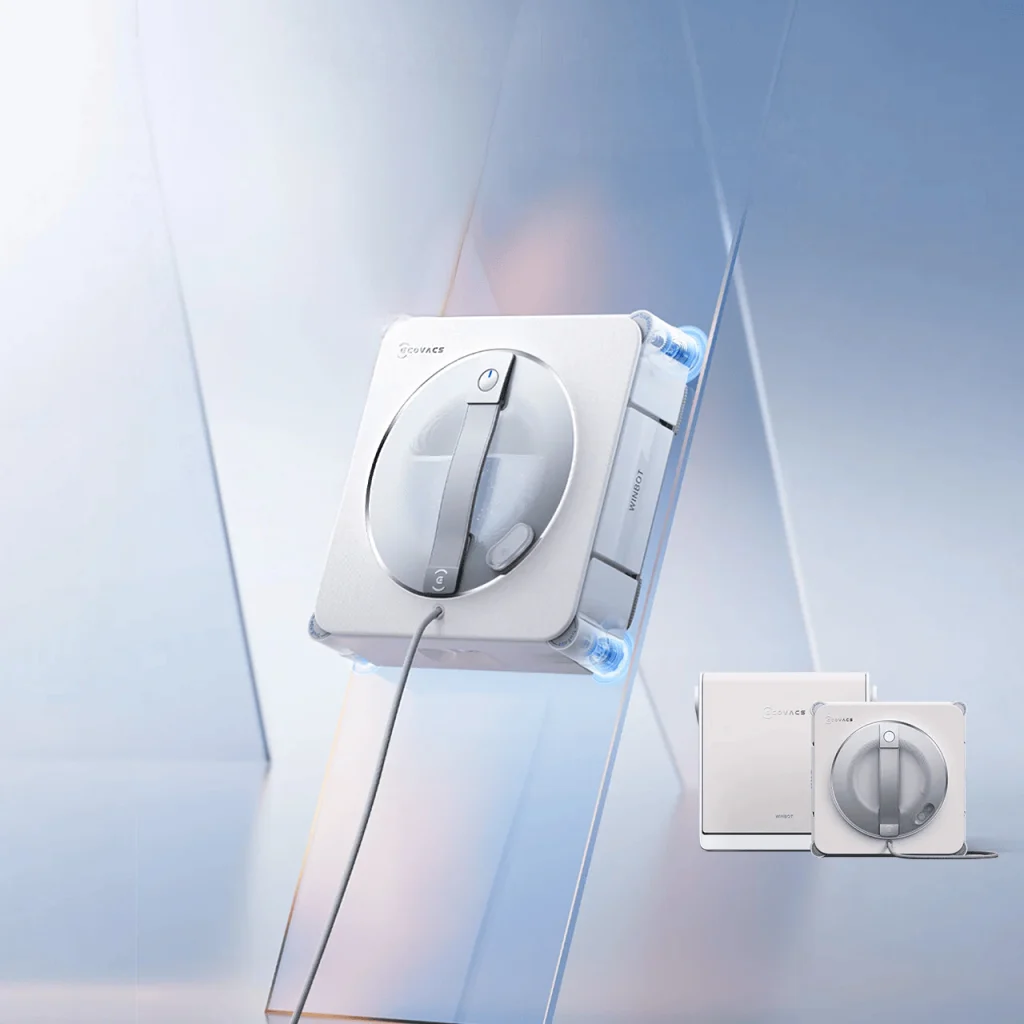
| ECOVACS WINBOT W3 | Strong suction numbers, narrow window fit | Interior/apartment windows |
| HUTT DDC55 Pro | Good edge reach, heavier body | Larger flat glazing |
| Skylight/roof robots (tracked) | Weak review coverage, few real tests | Skylights, glass roofs |
Notice the gap. The models with the most reviews are the ones easiest to review on a desk. The robots actually cleaning skylights and curtain walls get almost no independent coverage, which is exactly why buyers are stuck guessing. If you want a single reference point for the specialty segment, the collected skylight robot reviews cover the machines built for roofs and facades rather than apartment panes.
What should you check before trusting a review?
- Is there a slope in the video? Flat-window tests prove almost nothing about roof performance.
- Do they show the frame edge? Streak complaints live there.
- Is it one pass or three? Multi-pass footage hides weak suction.
- Who paid for the unit? Not disqualifying, but it changes what gets filmed.
- Is the battery figure under load? Climbing glass costs power.
My blunt take: for a homeowner with one inland window, a cheap desk-tested unit is fine. For anyone maintaining a skylight, glass atrium, or facade, ignore the consumer review crowd. The relevant question is not “is it popular” but “does it hold on wet glass at 20° for 60 minutes straight.” That is a different test, and almost nobody runs it.
Key Takeaways
- Judge reviews by edge distance, wet-glass suction, one-pass coverage and loaded run time — not star ratings.
- Most high-volume reviews cover desk-friendly interior units, not skylight or facade machines.
- A tracked skylight robot cleans roughly 150-250 m²/h with one operator versus 60-100 m²/h for a rope crew.
- Above 25-30°, assume faster battery drain and a required pre-rinse for heavy debris.
- Multi-pass footage and missing frame-edge shots are the two clearest signs a review is not a test.
Frequently asked questions about window cleaning robot reviews
Are five-star reviews trustworthy? Only when they describe a test. A five-star review with no slope, no frame-edge shot and no timing is a feeling, not evidence.
How many reviews should I read? Read four or five from different sources and look for the overlap. Where two independent reviewers report the same weakness, that weakness is real.
Do return rates tell a story? Sometimes. A model with a high return rate and glowing reviews means buyers were surprised by something the reviews did not mention — usually edge reach or runtime.
What a review should tell you before you spend money
The best reviews are boring. They show a timer, a wet pane, and an honest count of streaks. They admit that the robot left a 60 mm band along the frame, or that it needed a second pass on a sunny day. That kind of detail is worth more than ten glossy unboxings, and it is the only kind that helps you decide whether this machine fits the glass you actually own.
When you narrow the field, compare the models against the surfaces you manage rather than against each other in the abstract. A robot that is superb on a flat apartment window can be the wrong tool on a 20° glass roof, and no star rating captures that distinction.