
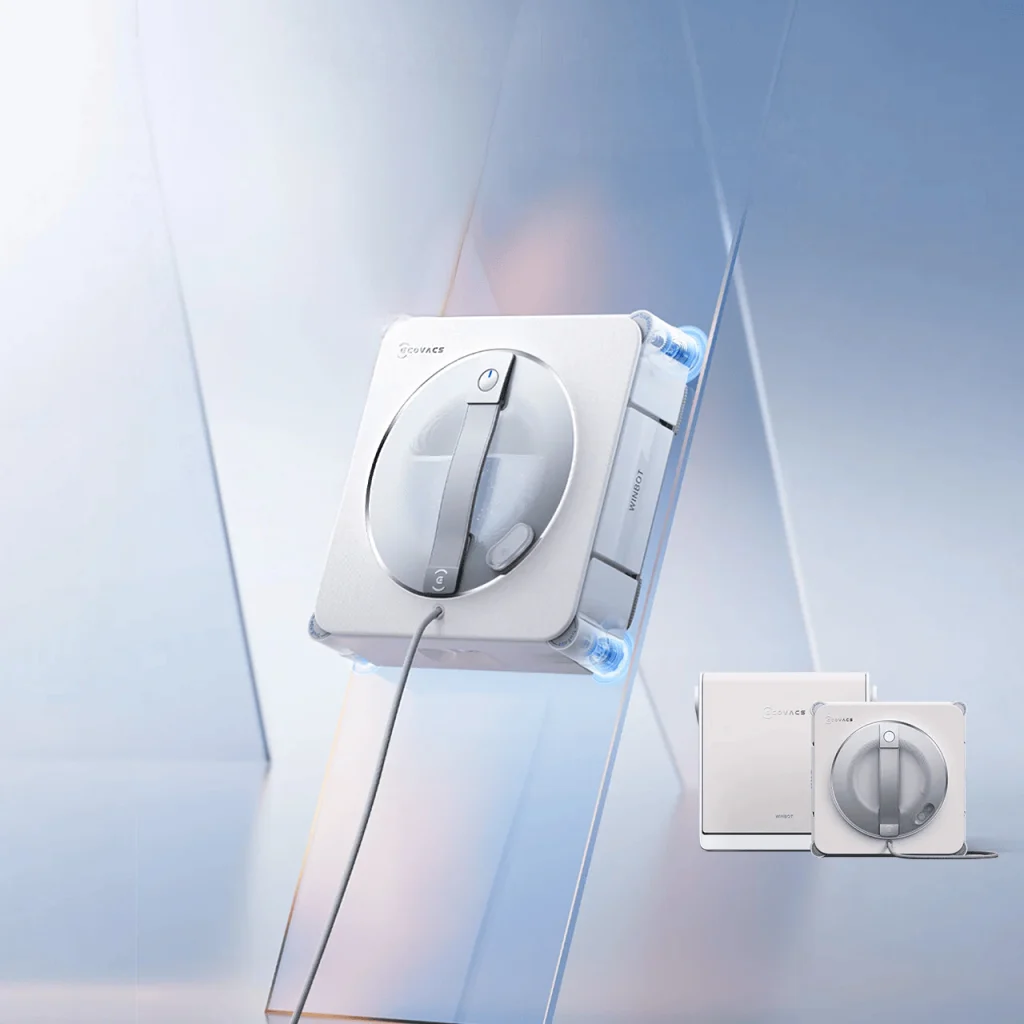
A cordless window cleaning robot typically runs 60–90 minutes per charge and covers 25–45 m² of flat glass before the battery fades to 70% suction. That is enough for a residential sunroom or a two-panel skylight bank, but not for a full commercial curtain wall.
Cordless is the most searched phrase in this category for a reason: nobody wants a power lead draped over a 12 m atrium roof. But the marketing around it hides a real trade-off. Every milliamp you give to the battery is suction you are not giving to the glass.
How long does a cordless window cleaning robot really last?
Expect 60–90 minutes of active cleaning from a 5,000–6,500 mAh pack. In our own testing notes on the Lingkong K3, a full charge handles roughly 30–40 m² on smooth tempered glass. On textured or dusty surfaces the brushes work harder, motors draw more current, and that figure drops to about 20–25 m².
Manufacturers quote figures measured on clean, dry, flat glass at 25°C. Real rooftops are not that. A skylight on a mall in Dubai at 45°C surface temperature will lose 15–20% of its rated runtime to thermal throttling alone.
- 60 min — small residential skylights, 6–10 m² runs
- 90 min — sunrooms, conservatory glass roofs, split across two charges
- 120 min+ — usually means a lower suction mode (2,500 Pa instead of 3,800 Pa)
Does cordless mean weaker suction?
Often, yes. Suction is the single biggest battery drain. A tethered unit can pull 3,800–4,500 Pa continuously because the wall supplies the current. A cordless unit at the same rating will hold peak suction for maybe 10 minutes, then ramp down to protect the cells.
For glass roofs pitched under 15 degrees, that ramp-down is usually fine — gravity is your friend. For vertical curtain wall above 20 m, where wind load and gusts act on the panel, you want continuous suction, and that points back to a tether or a track system.
Who should buy cordless, and who should not?
Cordless suits homeowners, facility teams with one or two skylights, and anyone cleaning heritage glass where drilling anchors is off the table. It does not suit a 40-storey tower running 8-hour cleaning shifts, or sites with 45-degree glazing where the robot needs to fight gravity and hold suction at the same time.
If you are weighing this against a full outdoor machine, our Lingyun Y3 review covers the obstacle-crossing version built for framed glass roofs where panel seams stop simpler robots.
What kills cordless runtime in the real world?
Three things. Heat above 40°C, which throttles the battery pack. A clogged filter, which forces the pump to work against back-pressure. And repeated suction spikes every time the robot crosses a mullion or frame — each frame line is a suction event that costs watt-hours.
There is also the charging math nobody mentions. Most packs take 2.5–3 hours to refill. If your cleaning window is a 4-hour morning slot before the building opens, you get one full run and one partial. That is the honest limit of cordless today.
Does a cordless robot replace a tether?
No. Cordless removes the power lead, which is a genuine convenience on a low skylight you can reach from a platform. It does not remove the need for a fall-arrest line on a machine working over a live space. Two different problems, two different solutions, and the marketing often blurs them.
Where cordless really earns its place is speed of setup. A tethered machine needs an anchor, a route check, and a cable run before the first pass. A cordless one is on the glass in under three minutes. For a facility team doing a handful of small glass roofs at five different sites in one day, that setup saving is worth more than the extra suction they gave up.
What is the best cordless setup for a glass roof?
Buy two packs. A single-pack cordless robot on a 1,000 m² roof will spend more time on the charger than on the glass, and swapping a pack beats waiting three hours. Pair that with a wet-cycle squeegee for streak control, and keep a dry pass for the final buff.
One more honest note: cordless robots are quiet, which matters more than buyers expect. A library or museum skylight cannot run a 70 dB machine during opening hours. Most cordless units sit in the 55–65 dB range, so a daytime window becomes possible where a tethered machine would have to work at night.
How does cordless compare to a mains machine on cost?
A cordless unit usually costs less up front because it skips the tether and the anchor hardware. The catch is the battery. Packs degrade, and a commercial cordless machine that runs two shifts a day will need replacement cells inside two years. Factor that in and the gap with a tethered machine narrows considerably.
For a homeowner running a skylight twice a year, the cordless premium is irrelevant and the convenience is everything. For a facility team, total cost per square metre is the only number that matters, and cordless often loses once duty cycle enters the frame.
Key Takeaways
- Cordless window cleaning robots run 60–90 minutes and cover 25–45 m² of flat glass per charge.
- Suction and battery compete directly; sustained 4,000 Pa is a tethered-machine job.
- Best fit is residential skylights, sunrooms, and low-slope glass under 15°.
- Heat, clogged filters, and frame crossings are the three real runtime killers.
- For vertical high-rise towers, check all skylight robot reviews before choosing cordless.