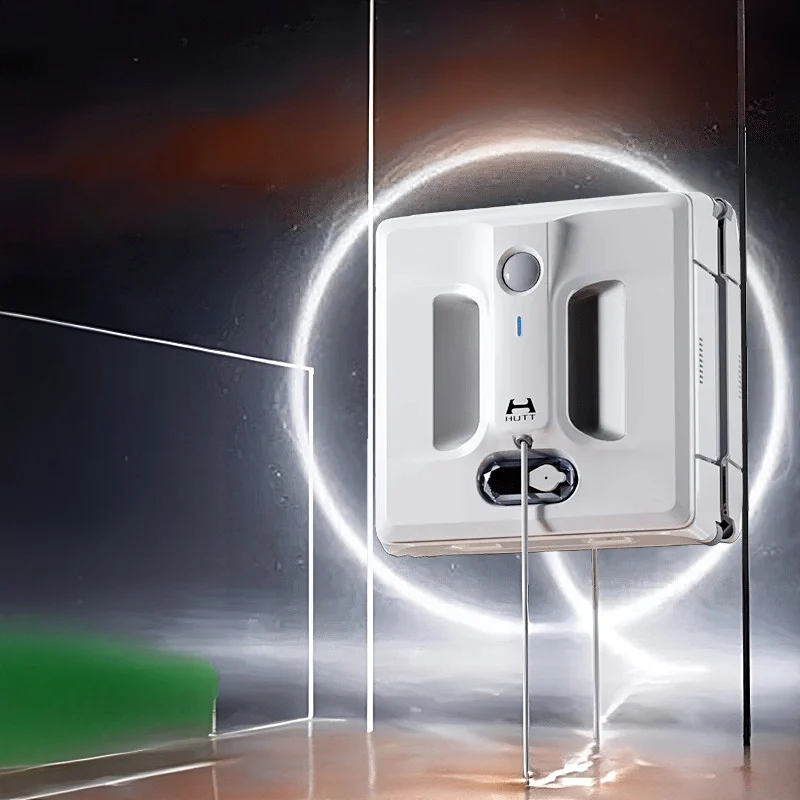
HUTT and ECOVACS build strong robots for vertical home windows, but neither is positioned as a skylight robot. Skylights need higher vacuum grip, slope ratings up to 25 degrees, and water recovery, so commercial buyers usually step up to a glass-roof platform instead.
Searches for HUTT window cleaning robot and ECOVACS window cleaning robot both spike before roof projects. That tells me people are trying to fit a home product into a commercial job. Sometimes it fits. Often it does not.
What do HUTT and ECOVACS actually do well?
Both are solid on vertical interior glass. HUTT leans into pad-based cleaning with strong brand recognition in Asia and Europe. ECOVACS carries the halo of its floor robots and a large service footprint. For a single-story home window, both are reasonable.
The limit is the application, not the badge. Neither is marketed as rated for skylight slopes, and consumer models rarely publish an IP rating or a wind limit.
Why do consumer robots struggle on skylights?
| Factor | Home window robot | Skylight-grade robot |
|---|---|---|
| Grip | Suction for vertical glass | Suction for slope + overhang |
| Water | Drip or mist | Recovery tank + squeegee |
| Rating | Often none stated | IP54+ typical |
| Service | Consumer warranty | Commercial contracts |
| Spec | Consumer robot | Commercial skylight robot |
|---|---|---|
| Slope rating | Unstated | Up to 25 degrees |
| Suction | Moderate, load-dependent | High, held under load |
| IP rating | None stated | IP54 or better |
| Spares | Limited | Documented supply |