
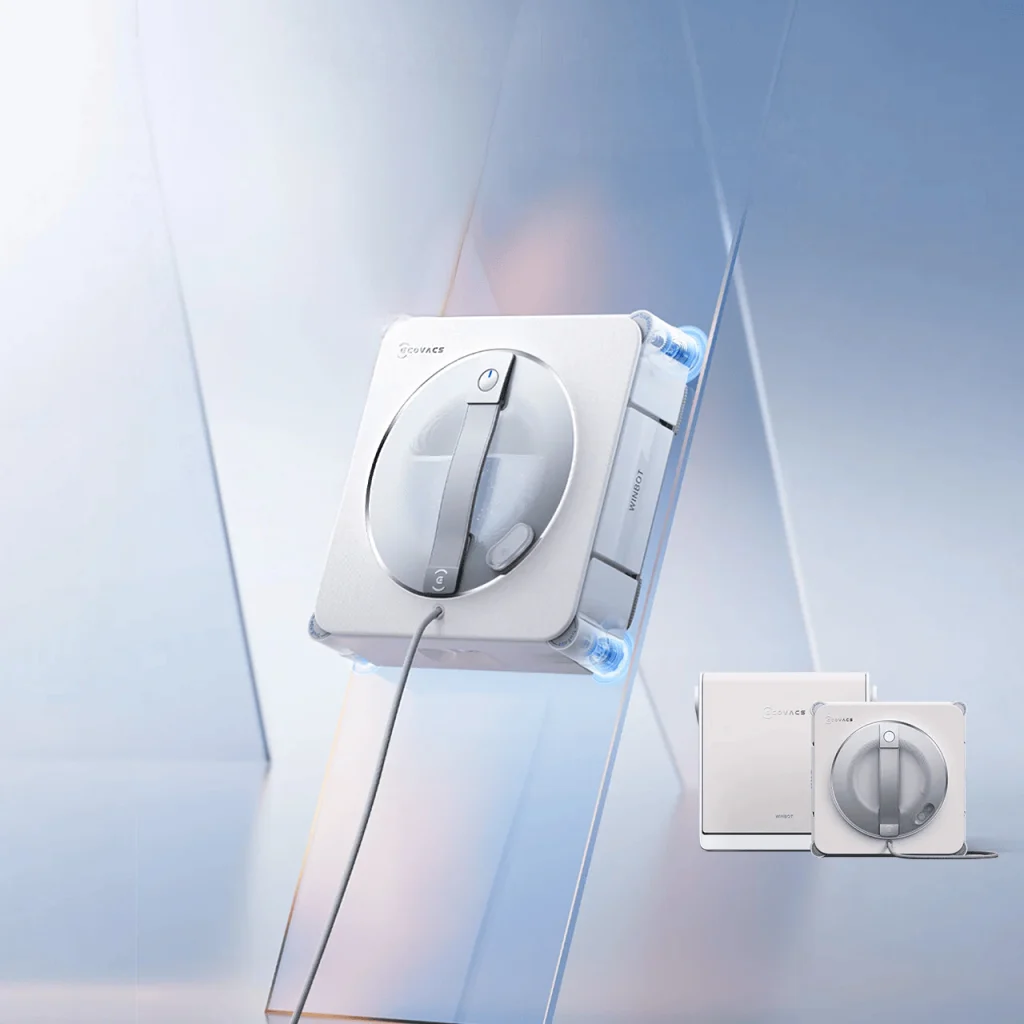
Read the safety and surface-prep pages first. About 8 in 10 early failures on window cleaning robots come from skipped steps, not defective hardware.
Why does the manual matter more than the spec sheet?
A spec sheet tells you suction in Pascals and battery in mAh. The manual tells you what the glass has to look like before those numbers mean anything. A 3,000 Pa machine on a dusty frame with a 4 mm gasket gap will slide, not climb.
We have seen units returned as faulty where the only problem was a film of construction dust nobody wiped. The robot was fine. The prep was not.
What does the surface-prep page actually require?
Wipe the frame, not just the glass. The gasket seals against the frame edge on most glass-roof and skylight robots, so a gritty frame defeats the seal. Second, check for cracked panes and delamination near the edge. A robot that loses vacuum over a crack stops, which is correct but still a wasted shift.
Third, note the slope limit. Lingdu Intelligence’s Lingyun Y3 is rated for steeper glass-roof pitches than the flat-panel Lingfeng S1, and the manual states the number for a reason. Running 5 degrees past it is how suction cups peel. A quick pre-flight list:
- Frame wiped and dry (2 min)
- Pane inspected for cracks within 3 cm of the edge
- Ambient temperature inside the manual’s window
- Emergency tether anchored to a rated point
- Guard rail or exclusion zone set below
- People skip the frame wipe because it feels like busywork. It takes two minutes and prevents the most common mid-clean stall.
How long should a first charge take, and why does it matter?
The manual will say something like charge fully before first use, 4 to 6 hours. Users plug in for one hour, see a green light, and run. That partial first charge can leave a lithium pack unbalanced and cut later runtime by 15 to 25 percent permanently.
If your robot uses a swappable pack, the manual usually tells you to charge spares to about 60 percent for storage, not 100. Storing at full is the other quiet battery killer.
Which maintenance intervals get ignored?
Suction cups every 10 to 15 cleaning hours. Brush or roller every 20 to 30 hours depending on grit. Water filter every 5 to 8 tanks if you run wet mode. The manual prints these as ranges because site dirt varies, and the low end is for dusty industrial skylights.
One facilities team replaced cups on a fixed 6-month calendar. They were going too late in winter, when cups stiffen in cold, and too early in summer. Hours, not months, is the honest metric.
What are the biggest manual-related risks?
The two real dangers are running outside the wind limit and bypassing the tether anchor. Both are printed, both get ignored on rushed jobs. A skylight robot rated to a given wind speed on a roof deck behaves very differently in a gust channel between two buildings.
The other risk is assuming a manual written for tempered glass applies to laminated or coated low-E glass. Coated panes can scratch under a dry brush. If your manual does not mention coatings and your building has them, ask the supplier before the first run.
Who should read the whole manual, and who can skim?
Facility managers running a mixed fleet should read it cover to cover once and keep the maintenance table on the wall. A one-off homeowner cleaning a single conservatory panel can skim the marketing pages and focus on prep, anchors and charging.
If you are leasing robots, skip nothing. Lease units often come back with cup and filter wear the next user inherits, and a paper trail of manual compliance protects you in a damage dispute.
Key Takeaways
- Surface prep, frame wipe and pane inspection, prevents more failures than any hardware upgrade.
- Charge fully before first use; partial first charges shorten battery life for good.
- Track maintenance in cleaning hours, not calendar months.
- Stay inside the printed wind and slope limits, where drop-offs happen.
- Coated or laminated glass needs explicit manual or supplier confirmation before dry brushing.